Materials and construction
Acrylic vs Lacquer Kitchen Doors for UAE Homes
Key points
- Acrylic gloss is a factory-made surface layer; lacquer is a coating sprayed and cured on the door.
- Lacquer can reach a deeper, perfectly flat gloss but shows chips and is harder to repair.
- Acrylic is easier to clean and replace, and holds its colour well.
- Laminate and melamine are the toughest everyday choice for working kitchens and rentals.
- In the UAE, check edges, heat protection and UV stability as well as the face.
Acrylic vs lacquer kitchen doors is a question we hear in almost every gloss kitchen project in Dubai and Abu Dhabi. Both give a bright, reflective finish that suits modern villas and apartments. They are made differently, though, and that changes how they cope with daily cooking, cleaning, sun and air-conditioning.
This guide compares acrylic, lacquer and laminate for developers, fit-out contractors, designers and villa owners in the UAE. For a wider look at materials, see kitchen door materials explained.
How each door is made
- Acrylic: a sheet of acrylic (PMMA) is bonded to the face of an MDF or particle board panel in the factory, and the edges are banded to match. The gloss comes from the acrylic sheet itself, so every door has the same shine.
- Lacquer: an MDF door is primed, sprayed with several coats of lacquer, cured, sanded and, for high gloss, polished. The finish wraps the face and edges in one coating.
- Laminate and melamine: a decorative paper impregnated with resin is pressed onto the board under heat. High-pressure laminate (HPL) is thicker and tougher; melamine is the thinner version used on most cabinet boards and many slab doors.
Acrylic vs lacquer kitchen doors: side by side
| Acrylic | Lacquer | Laminate / melamine | |
|---|---|---|---|
| Gloss | High, consistent from door to door | Highest; can be polished perfectly flat | Matt, satin or gloss; gloss is less deep |
| Edges | Banded; a fine line is visible | Seamless, coated with the face | Banded |
| Scratches | Fine scratches show on dark colours; light ones can be polished out | Hard surface, but chips show and are hard to blend | Very good, especially in textured finishes |
| Heat | Keep away from direct oven heat | Good | Good |
| Humidity | Good if edges are well banded | Good if the back and edges are sealed | Good if edges are well banded |
| Repair | Replace the door | Specialist respray; hard to match aged doors | Replace the door |
| Relative cost | Mid to high | High | Lower |
Where acrylic works best
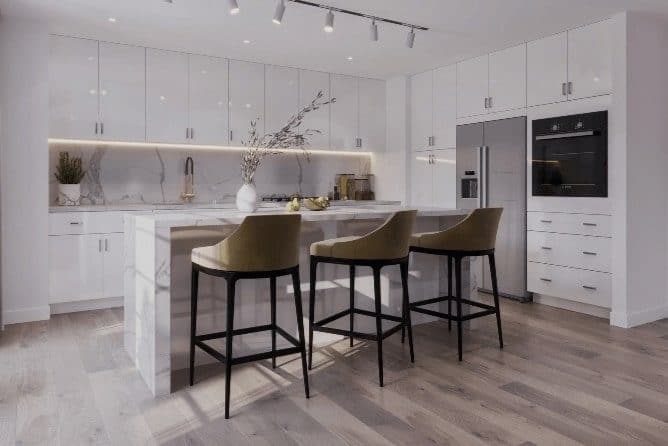
Acrylic is the practical gloss. It gives a mirror-like finish that makes compact apartment kitchens feel larger, and every door matches because the gloss is part of the sheet. It is easy to wipe clean, and it is quicker to produce in volume than a hand-finished lacquer, which suits apartment towers where hundreds of kitchens must look identical. Our Lustre acrylic gloss doors are made this way.
Specify acrylic with care near heat. Use spacers or heat deflectors on oven housings, and keep acrylic doors away from the hot air of built-under ovens. Dark gloss colours show fine scratches and fingerprints more than white or light grey, so they suit show kitchens better than busy working kitchens.
Where lacquer works best
Lacquer suits premium villas, where a designer wants a flawless, deep gloss, a seamless edge or a bespoke colour. Because it is a coating, lacquer can be applied to curved or routed doors and matched to almost any colour reference. The trade-offs are cost and time, and repairs: a chip in high-gloss lacquer is visible, and a touched-up area rarely matches doors that have aged for a few years. Matt and satin lacquers hide wear much better than gloss.
Laminate: the working kitchen choice
For working kitchens, staff kitchens, pantries and rental apartments, laminate and melamine are the toughest everyday option. They resist knocks, cleaning chemicals and heat, and they come in matt, woodgrain and stone-effect finishes. Many Dubai villas use gloss or lacquer in the open show kitchen and laminate in the closed working kitchen behind it. We explain the split in show kitchen vs working kitchen in UAE villas.
What the UAE climate adds
- Sun and UV: doors in sunlit open-plan kitchens near large windows can change colour over time. Ask whether the acrylic or lacquer is UV-stable, especially for whites and pale colours.
- Air-conditioning and humidity: the swing between cool, dry rooms and humid air when windows are opened stresses every edge. Edge banding must be continuous, and lacquered doors must be sealed on the back as well as the face.
- Dust and cleaning: gloss shows dust and streaks. Recommend microfibre cloths and mild cleaners to residents; abrasive pads will dull acrylic and lacquer alike.
Our guide to humidity resistant kitchen cabinets covers the carcass and edge details behind any front.
How to choose
- Apartment towers: acrylic gloss or matt melamine, for consistency across every unit.
- Villa show kitchens: lacquer for a flawless finish or bespoke colour; acrylic for gloss with easier upkeep.
- Working kitchens and pantries: laminate or melamine.
- Rentals and staff accommodation: melamine or laminate, which are cheap to replace and hard to damage.
Questions to ask before you approve samples
- Is the gloss from an acrylic sheet, a lacquer coating or a laminate?
- How are the edges finished, and are the backs sealed?
- Is the finish UV-stable, and what heat protection is recommended near ovens?
- Can replacement doors be supplied in the same colour later?
Sanyang has manufactured kitchens for more than 25 years in our own factories in China, Vietnam and Thailand, and ships 500+ containers a month to the US. Our 16 collections include acrylic gloss, super-matt and woodgrain melamine, and vinyl-wrapped finishes, with 300 door and colour options. See all kitchen collections, or visit our Deira showroom to compare finishes side by side.
Frequently asked questions
What is the difference between acrylic and lacquer kitchen doors?
Acrylic doors have a factory-bonded acrylic sheet that gives the gloss. Lacquer doors are sprayed with several coats of lacquer that are cured and polished, so the finish wraps the face and edges.
Which is better for a kitchen, acrylic or lacquer?
Acrylic is more consistent, easier to clean and replace, and suits apartments. Lacquer gives the deepest, seamless gloss and any colour, and suits premium villas, but it is harder to repair.
Do acrylic kitchen doors scratch easily?
Fine scratches can show on dark gloss colours. Light marks can often be polished out, and lighter colours hide wear better.
Is laminate good for kitchens in the UAE?
Yes. Laminate and melamine are tough, heat- and moisture-resistant and easy to clean, which makes them a strong choice for working kitchens and rental homes.
About the author. Written by Sanyang's design and technical team, drawing on more than 25 years of manufacturing kitchen and bathroom cabinetry and more than 500 containers a month shipped to the United States. About Sanyang.