Materials and construction
Kitchen Door Materials Explained: Solid Wood to Acrylic
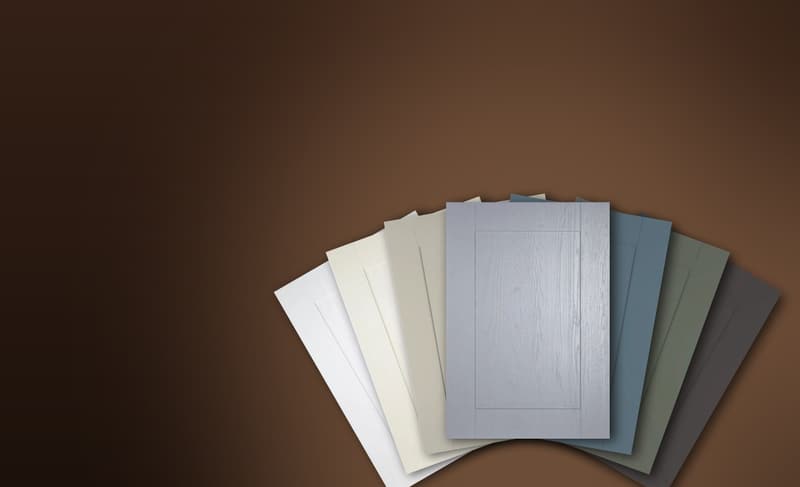
Key points
- Five-piece solid-wood doors are the most durable and repairable, and the most expensive.
- Vinyl-wrapped MDF (PVC thermofoil) gives a seamless painted look at lower cost and wipes clean.
- Acrylic gives the deepest gloss; super-matt melamine resists fingerprints.
- Synchronised-grain melamine is the most convincing wood effect for the price.
- In the Gulf, choose stable materials: thermofoil, acrylic and melamine do not move with humidity the way solid panels can.
Door material is the single biggest driver of how a kitchen looks after five years of use. It also drives cost: in a typical specification, doors and drawer fronts are a large share of the price. Here are the six materials you will meet in our range, and how they behave.
Five-piece solid wood
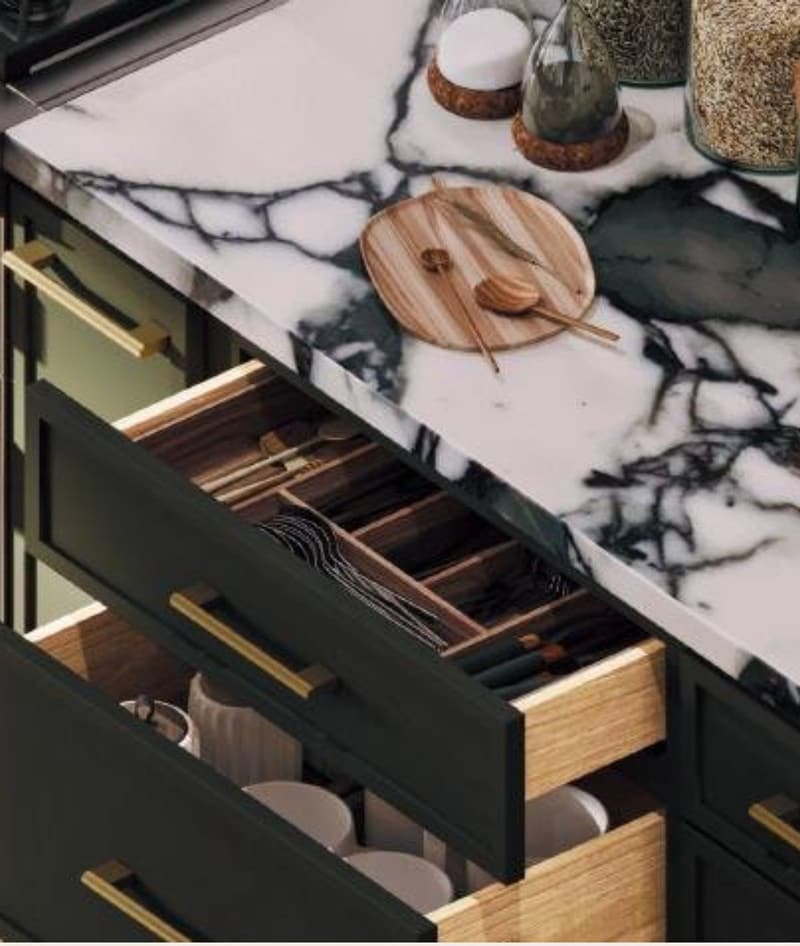
A frame of solid timber around an MDF centre panel (a solid-wood centre panel would move and split as humidity changes). Painted or stained, it is strong, can be repaired and repainted, and feels substantial. It is the material of our cabinet collections: Meridian, Equinox, Halcyon, Filament, Lantern and Daylight.
Specify for: show homes, premium private sale, villas and any kitchen expected to last twenty years or more.
Vinyl-wrapped MDF (PVC thermofoil)
An MDF door is machined to a profile, then a thin PVC film is vacuum-pressed over the face and edges. The result is seamless, with no joints to crack, and it wipes clean. It gives the painted-shaker look at a lower price and is available in a huge range of colours and woodgrains. Keep it away from direct oven heat: use heat deflectors next to built-under ovens. Our Spectrum, Candela and Golden Hour ranges use it.
Acrylic
A layer of acrylic bonded to board gives a deep, glassy gloss that holds its colour. It is more scratch-resistant than gloss lacquer and lighter-reflecting than any other finish, which is why it is popular in compact apartments. See Lustre.
Melamine (MFC) in matt and woodgrain
Decorative paper impregnated with resin and fused to the board. Modern melamines are far better than the kitchens many people remember: textured woodgrains (Ember), super-matt anti-fingerprint surfaces (Dusk) and plain colours (Dawn). It is the most economical and among the hardest-wearing surfaces.
Synchronised grain
A melamine whose surface texture is pressed in register with the printed grain, so you feel the grain exactly where you see it. It is the most convincing wood effect short of real veneer. See Dapple.
Designer panels
Stone, metallic and concrete effects on board, used for islands, tall banks and feature walls rather than whole kitchens. See Eclipse.
Quick comparison
| Material | Look | Durability | Relative cost |
|---|---|---|---|
| Solid wood five-piece | Painted or stained shaker | Excellent, repairable | £££ |
| Thermofoil | Painted-look profiles, woodgrains | Good, avoid direct heat | ££ |
| Acrylic | Deep gloss | Good | ££ |
| Synchronised grain | Realistic oak | Very good | ££ |
| Melamine | Matt, woodgrain, plain | Very good | £ |
A note on the UAE climate
Solid timber panels can expand and contract between air-conditioned interiors and humid outdoor air. That is why our solid-wood doors use an MDF centre panel, and why thermofoil, acrylic and melamine are such reliable choices for coastal apartments.
Not sure which to specify? Tell us who will use the kitchen and for how long, and we will recommend a door and construction. Contact the team.
Frequently asked questions
What is the most durable kitchen door material?
Five-piece solid wood is the most durable and repairable. Among lower-cost options, melamine and acrylic are very hard-wearing.
What is a vinyl-wrapped kitchen door?
An MDF door covered in a thin PVC film (thermofoil) that is vacuum-pressed over the face and edges, giving a seamless, wipe-clean finish.
Do vinyl-wrapped doors peel?
Good thermofoil is very durable, but sustained heat can lift the film. Fit heat deflectors beside built-under ovens and avoid steam from kettles directly under wall units.
About the author. Written by Sanyang's design and technical team, drawing on more than 25 years of manufacturing kitchen and bathroom cabinetry and more than 500 containers a month shipped to the United States. About Sanyang.